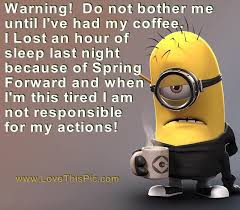
Monday, March 10, 2025

10 March

NATIONAL NAPPING DAY  

Each year, National Napping Day recognizes our need the day following the return of daylight saving time. Not only does the observance encourage a nap, it reminds us that there's no shame in taking one either. While preparing for the time change can offset the shock to our internal clock, many other things in our life may not handle the change so well causing us to still lose sleep. Young children and pets do not adjust as easily and certain work schedules do not permit early adjustment, either.

National Napping Day

Mid-afternoon naps are an integral part of most cultures, and scientifically proven to be good for you.

A needed rest can make you feel better and also improve your mood. After having the extra amount of sleep, a person will notice that they will be more productive and energetic. Numerous studies have shown that short 10-20 minute naps are the most effective when midday fatigue hits. Improvements in alertness, productivity, and mood have all been shown to improve with this type of snooze.  

Though there are some of us who are just not the napping kind, if you can reap those benefits, find a cozy spot for 10 minutes or so on National Napping Day.

HOW TO OBSERVE NATIONAL NAPPING DAY

  • Catch some zees!
  • Be sure to nap early enough in the day so as to not interrupt your regular sleep cycle. 
  • Create a perfect napping environment. 
  • Share your favorite type of nap or why you enjoy a good snooze.
  • Take a relaxing nap.


Sunday, March 09, 2025

09 March

DAYLIGHT SAVING TIME  

Daylight Saving Time begins on the second Sunday in March in the USA. The practice gives people an extra hour of sunlight in the evening by setting the clock ahead one hour on a predetermined date each year.

Daylight Saving Time

The practice of Daylight Saving Time (DST) advances clocks during the summer months. It causes us to lose an hour for one day. However, the practice allows people to get up earlier in the morning and experience more daylight in the evening. Typically, users of DST adjust clocks forward one hour near the start of spring. Then, they change them back again in the autumn.

The system has received both advocacy and criticism. Setting clocks forward benefits retail business, sports, and other activities by exploiting sunlight after working hours. However, the practice causes problems for evening entertainment and other activities tied to the sun or darkness. For example, farming and fireworks shows are both affected.

Although some early proponents of DST aimed to reduce the evening use of incandescent lighting, usage patterns differ greatly. Additionally, research about how DST currently affects energy use is limited or contradictory.

Problems sometimes caused by DST clock shifts include:

  • Complicating timekeeping.
  • Disrupting meetings, travel, billing, record keeping, medical devices, heavy equipment
  • Impacting sleep patterns

Software often adjusts computer clocks automatically, but this can be limited and error-prone. In addition, programming is particularly problematic when various jurisdictions change the dates and timings of DST changes.

How to Observe Daylight Saving Time

  • Besides adjusting our clocks, it's important to adjust our sleep schedules, too. Many of us go into the time change sleep deprived. Don't do this during Daylight Saving weekend.
  • Start preparing your body and anyone in your household for an earlier bedtime.
  • That includes pets. Their potty and feeding schedules will need to be adjusted, too. Start a few days before if at all possible.
  • In the end, you and your entire household will be able to benefit from the additional sunlight in the evenings by enjoying outdoor activities without feeling the drag of lack of sleep.
  • Another way to celebrate the day might include writing your representatives in Congress. According to the National Congress of State Legislatures, nearly every state has tackled the issue of daylight saving time and whether to end it or not. Even at a federal level, the issue has been brought to the table a time or two.
  • Of course, most importantly, be sure to turn your clocks forward

Daylight Saving Time History

George Vernon Hudson from New Zealand proposed the modern version of daylight saving in 1895. Germany and Austria-Hungary were the first countries to use it starting on 30 April 1916.

The energy crisis in the 1970s accelerated the growth of Daylight Saving Time. It has been argued that more natural light in the evening hours uses less electricity due to less artificial lighting requirements. As a result, many retail shops and tourist attractions also enjoy more business.

Daylight Saving FAQ

Q. When does Daylight Saving end?
A. Daylight Saving ends in November.

Q. How much daylight is saved?
A. None. It's just moved from one end of the day to the other.

Q. Does every state participate in Daylight Saving?
A. No. Arizona, Hawaii, and parts of Indiana do not participate in Daylight Saving. The U.S. territories do not, either.

Q. Do other countries observe Daylight Saving?
A. Yes. Many countries observe Daylight Saving including Australia, most areas in North America, and countries in Europe.


Also

Barbie Day 

Ointment Day

Get Over it Day

Meatball Day

I Am Day

Slam the Scam Day


Today's Thought

If you are not willing to risk the unusual, you will have to settle for the ordinary. ~ Jim Rohn


 11 days until Spring


Saturday, March 08, 2025

08 March

NATIONAL PEANUT CLUSTER DAY  

March 8th is National Peanut Cluster Day! Melted chocolate mixed with peanuts makes a perfect combination for sweet and salty deliciousness!

Peanut Cluster Day

Two things had to happen for peanut clusters to even exist. First, a method had to be invented for the cocoa bean to be processed and transformed into what we know as chocolate. That process wasn't widely used until about the late 1890s and just about the same time the second extraordinary thing happened; agriculture found a way to grow the peanut and bring it to the public with steel tools and steam power.  

It didn't take long for confectioneries to add the now readily available peanuts to melted chocolate. The sheer simplicity of the salty peanuts added to sweetened chocolate is a mouthwatering temptation few can resist, even today. Candy makers find them to be a popular addition to cookie tins or other holiday baskets. Their simplicity allows bakers to easily round out any cookie or bar tray. They also quickly satisfy a snack craving without much effort at all. 

How to Observe Peanut Cluster Day

  • Snack on some peanut clusters.
  • Make your own at home.
  • Share some with friends and family. 

Peanut Cluster Day History

We continue to research the origins of this nutty food holiday but have come up empty-handed. Well, we've found a handful of peanut clusters, but that's another story. 

Peanut Cluster FAQ

Q. Can peanut clusters be made with white chocolate?
A. Yes. Peanut clusters can be made with milk, dark or white chocolate.

Q. How long do peanut clusters keep?
A. Store peanut clusters in an airtight container and they will keep for several months.

Q. Can peanut clusters be frozen?
A. Yes. Seal in an air-tight, freezer-safe container before freezing.


 Also

International Women's Day

Oregon Day

Proofreading Day

Today's Thought

Rejection tests whether you're serious about your dream.


 12 days until Spring


Friday, March 07, 2025

07 March

The company finally got the Internet repaired after the high winds.  Out since yesterday afternoon.

 NATIONAL CEREAL DAY  

March 7th urges us to get our bowl spoon ready for National Cereal Day each year! Since the end of the 19th century, cereal has become America’s most popular breakfast food.

National Cereal Day

Now, not only is cereal eaten for breakfast, but it has become a popular bedtime snack. Some people even enjoy a bowl for an evening meal. Bakers turn to cereal in their cake, cookie, and bar recipes. The most popular one is Rice Crispy Bar Treats.

A Little Cereal History:

Ferdinand Schumacher, a German immigrant, began the cereal revolution in 1854 with a hand oats grinder in the back room of a small store in Akron, Ohio. His German Mills American Oatmeal Company was the nation’s first commercial oatmeal manufacturer.  In 1877, Schumacher adopted the Quaker symbol, the first registered trademark for a breakfast cereal.

Granula, the first breakfast cereal, was invented in the United States in 1863by James Caleb Jackson, operator of Our Home on the Hillside, which was later replaced by the Jackson Sanatorium in Dansville, New York.  The cereal never became popular since it was inconvenient as the heavy bran nuggets needed soaking overnight before they were tender enough to eat.

Do you remember mornings eating a bowl of cereal, reading the back of the box and trying to find the toy inside the box?

The cereal industry rose from a combination of sincere religious beliefs and commercial interest in healthy foods. Dr. John Harvey Kellogg experimented with granola.  He boiled some wheat, rolled it into thin films, and baked the resulting flakes in the oven; he acquired a patent in 1891.  In1895 he launched Cornflakes, which overnight captured a national market.

In 1906, Dr. John Harvey Kellogg’s brother, William K. Kellogg, after working for John, broke away, bought the corn flakes rights from his brother, and set up the Battle Creek Toasted Corn Flake Company.  His signature on every package became the company trademark and insurance of quality.

Charles W. Post introduced Grape-nuts in 1898 and soon followed with Post Toasties.

Because of Kellogg and Post, the city of Battle Creek, Michigan is nicknamed the "Cereal Capital of the World."

How to Observe National Cereal Day

  • Give a shout-out to your favorite cereal brand.
  • Have a bowl for breakfast, lunch, and dinner.
  • Share it as a snack.
  • Create a delicious recipe from cereal and share your recipes. 

National Cereal Day History

After two scoops, a prize, and a second helping, the identity of the day's founder has fruit us for a loop. We tried boo berry hard. If it were a life mission, perhaps it would be more than just trix for kids. However, we figure if we snap, crackle, and pop a few more times, we might cereously score the lucky charms we krave that will lead us to the answer. It might seem corny, but our capt'n crunches in the research department!

Cereal FAQ

Q. Who's idea was it to give away prizes with cereal?
A. Look to the original cereal makers for that answer. Dr. John Harvey Kellogg tempted kids to eat his cereal with a prize in exchange for a mailed proof of purchase. However, soon the prizes were being included inside the box.

Q. Do cereals still include toys in their cereal boxes?
A. These days, it's rare for cereal makers to include toys in the cereal box. Occasionally, a cereal maker will make a special promotion that includes a toy, like General Mills did in 2020. However, today's cereal makers are following tech-savvy kids and their own bottom line by drawing the kids to the internet to earn prizes, credits, and more.

 Also

Be Heard Day

Crown of Roast Pork Day

Flapjack Day

Tartar Sauce Day

Dress in Blue Day

Speech & Debate Education Day

Employee Appreciation Day


Today's Thought

Collaborate with people you can learn from. ~ Pharrell Williams


 14 days until Spring


Thursday, March 06, 2025

06 March

National Oreo Cookie Day

The Oreo sandwich cookie is made up of two chocolate disks containing a sweet cream filling and is loved by millions. Since its introduction, the Oreo cookie has become the best-selling cookie in the United States.

The National Biscuit Company (today known as Nabisco) first developed and produced the “Oreo Biscuit” in 1912 at its Chelsea factory in New York City. Today, the block on which the factory was located is known as “Oreo Way.”

  • The name “Oreo” was first trademarked on March 14, 1912.
  • The first Oreo cookies in the United States sold for 25 cents a pound in clear glass topped novelty cans.
  • In 1912, the Oreo Biscuit was renamed “Oreo Sandwich.”
  • In 1948, the Oreo Sandwich was renamed “Oreo Creme Sandwich.”
  • William A. Turnier developed the modern-day Oreo design in 1952 to include the Nabisco logo.
  • Nabisco’s principal food scientist, Sam Procello, developed the modern Oreo cookie filling.
  • Celebrate the day by taking a poll of your friends and family and finding out how they eat their Oreos.
  • Dunk them in milk.
  • Crush them up and sprinkle them on ice cream.
  • Use them to make a delicious dessert
  • Share them with a friend.
  • Try a new flavor of Oreos.
  • Grab a glass of milk and a handful of Oreos to enjoy

National Oreo Cookie Day History

National Day Calendar continues to research the origins of this iconic cookie holiday. However, we suspect an Oreo lover created the day. 

Oreo FAQ

Q. How many different ways are there to eat an Oreo?
A. You're only limited by your imagination. Try these ideas:

  • Twist them apart, eat the cream center, and put them back together.
  • Twist them apart, eat the cream and cookie side first, and cookie only side last
  • Eat the cookie side first, and the cookie and cream side last
  • Any combination of the above while dunking in milk
  • Skip the milk and eat them whole.
  • Eat them whole, with milk but no dunking
  • Eat them whole dunking all the way
  • Some other interesting combination the world has never heard about

 Also

Dentist's Day

Dress Day

Frozen Food Day

White Chocolate Cheesecake Day

Hospitalist Day


Today's Thought

Great people do things before they're ready. ~ Amy Poehler


 14 days until Spring


Wednesday, March 05, 2025

05 March

Late Post...high wind warning...no power

NATIONAL MULTIPLE PERSONALITY DAY 

National Multiple Personality Day on March 5th has two separate approaches to recognizing this day. 

Multiple Personality Day

The first strategy takes an inward examination of our own personalities. This approach sees the day as a way to explore personality traits and examining the roots of those traits. Each one of us shows a different side of our characters at other times and in different places. Sometimes our personalities appear to be altered, depending on whom we are with and what we are doing. With these things in mind, the day focuses our thoughts on our own personality traits.

The other view of the observance aims to raise awareness of the disorder. Multiple Personality Disorder is better known as Dissociative Identity Disorder (DID). It is characterized by at least two distinct and relatively enduring identities or dissociated personality states that alternately control a person’s behavior. Someone with DID will experience memory impairment for important information not explained by ordinary forgetfulness. While the disorder affects less than .1 to 1 percent of the population, its impact is profound for that community and their family. The continued need for treatment, support, and research remains. 

How to Observe Multiple Personality Day

While there are two ways to approach this day, you can choose to recognize both.

  • Start by exploring your personality traits. T
  • ake a personality test and learn more about your personality.
  • Invite a friend to take the test with you and compare your results.
  • Learn more about Dissociative Identity Disorder. Please find out how it affects a person and how it is treated.
  • Attend a seminar or read up about the disorder.
  • Show support for those with the disorder by sharing your newfound understanding.
  • Use #MultiplePersonalityDay to post on social media.

National Multiple Personality Day History

National Day Calendar continues to research the origins of this multi-faceted day. 

Multiple Personality FAQ

Q. How common is dissociative identity disorder?
A. Dissociative identity disorder (DID) is rare. It affects less than 1% of the population.

Q. What are some signs of DID?
A. Only a doctor can diagnose DID, and it can be difficult to diagnose. 

Also

Absinthe Day

Cheese Doodle Day

Ash Wednesday

Today's Thought

"One Day" or "Day One"  You decide


 15 days until Spring


Tuesday, March 04, 2025

04 March

NATIONAL PANCAKE DAY – IHOP  

Every year at the end of February or beginning of March, National Pancake Day raises money for charity. IHOP restaurants began National Pancake Day in 2006. Since that day, they have raised close to $30 million for charities. People from around the country will once again celebrate enjoy free pancakes at IHOP Restaurants. Guests are asked to consider leaving a donation.

National Pancake Day

Also known as Johnnycakes, griddle cakes, or hotcakes, this batter-made breakfast item dates back more than 30,000 years. In fact, it may be the oldest breakfast food in history. They're delicious with whipped cream, maple syrup, fruit, and berries.

How to Observe National Pancake Day

  • Visit IHOP and have pancakes for a good cause.
  • Be sure to take your gift card, or share it with others!
  • Make a donation.
  • Share your favorite toppings.
  • Invite someone to enjoy pancakes with you.
  • Take a picture and post it on social media.

From 7 AM to 4 PM, IHOP is offering one free short stack of their Original Buttermilk Pancakes. Donate to help children battling critical illnesses. Each year since 2006, IHOP National Pancake Day has raised nearly $30 million. Visit www.IHOP.com for more information on participating locations and charities.

Pancake FAQ

Q. What are pancakes made from?
A. Pancake ingredients such as flour, sugar, eggs, milk, and oil create a batter. Spoonfuls of batter are then poured onto a hot griddle to make this tasty flat cake.

Q. Are pancakes only for breakfast?
A. No. Pancakes can be eaten at any meal, but they are a common breakfast item.

Also

Grammar Day

Marching Music Day

Pound Cake Day

Sons Day

Fastnacht Day  

Fat Tuesday

Paczki Day 

Today's Thought

Growth and comfort do not co-exist. ~ Ginni Rometty


Trying Again

Harvest Time

 Harvest Time In rural of Missouri, the silence is usually disturbed by only the chirping of the songbirds and the chattering of the squirre...